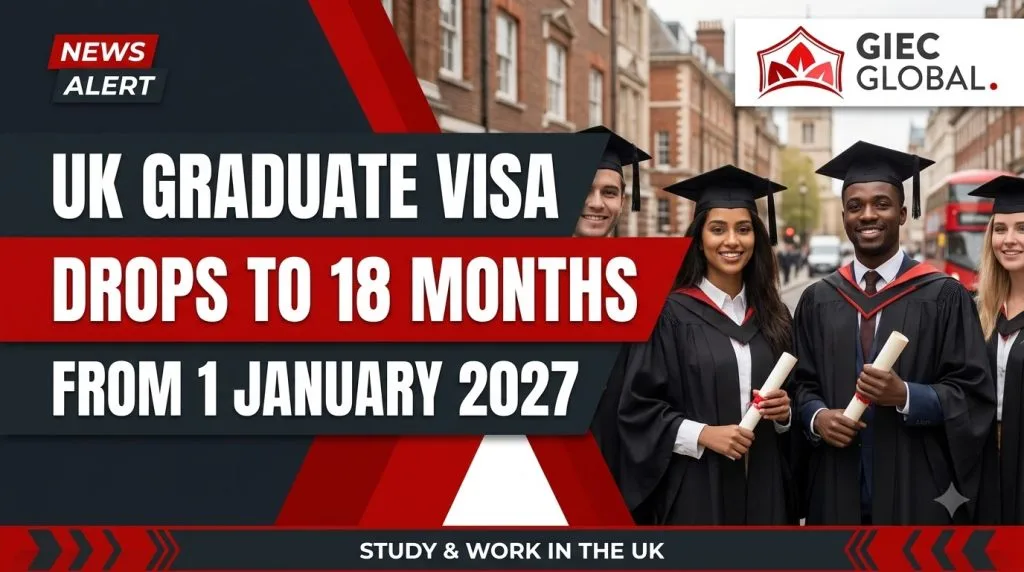
Summary: Bachelor's and master's graduates who apply for the UK Graduate visa on or after 1 January 2027 will get 18 months instead of two years. Applications made by 31 December 2026 still receive two years. PhD graduates keep three years.
International students in the UK have about six weeks left to secure a two-year Graduate visa. From 1 January 2027, bachelor’s and master’s graduates who apply for the Graduate route will receive 18 months of permission instead of two years, while PhD graduates will continue to receive three years. The official GOV.UK guidance now states that applications made on or before 31 December 2026 still qualify for the longer two-year grant.
The change is already written into the Immigration Rules. It was introduced through a Statement of Changes published on 14 October 2025, following a commitment in the government’s May 2025 immigration white paper.
What is changing?
The Graduate visa allows international students who have completed an eligible UK degree to stay and work, or look for work, without needing an employer sponsor. Under the current rules, most graduates receive two years.
The GOV.UK Graduate visa page sets out the new position clearly:
- Apply on or before 31 December 2026: 2 years for bachelor’s and master’s graduates.
- Apply on or after 1 January 2027: 18 months for bachelor’s and master’s graduates.
- PhD or other doctoral qualification: 3 years, unchanged.
The deciding factor is the date the application is made, not the date a course finishes or the date of graduation. A student who completed a master’s degree in 2026 but waits until January 2027 to apply will receive 18 months.
Who will be affected?
The cut will mainly affect international students on one-year taught master’s programmes and undergraduate courses. Many students who started a master’s degree in January 2026 are due to finish in early 2027, which means they are likely to fall under the new 18-month rule regardless of what they do now.
Students finishing this autumn are in a different position. If their university has already told the Home Office that they have completed their course, they may be able to apply before the end of December and lock in two years.
Doctoral graduates are not affected by the reduction.
What applicants need to know about timing
The GOV.UK guidance sets out several rules that determine when a graduate can apply:
- The applicant must be in the UK when they apply.
- They must apply before their Student visa expires.
- They can apply once their education provider has reported to the Home Office that they have successfully completed the course. They do not need to wait for a graduation ceremony or certificate.
That last point is important for students hoping to apply before 1 January. Universities report course completion on their own timelines, and the Christmas period may slow administrative processes. Students who want to apply in December should check with their university’s international student or compliance team whether completion has been, or will be, reported in time.
The cost of applying
According to GOV.UK, the Graduate visa application fee is £937. Applicants must also pay the Immigration Health Surcharge, which is £1,035 for each year of permission. These costs apply whichever length of visa is granted, although the total surcharge depends on the period of leave.
Why the government made the change
The reduction was first set out in the May 2025 immigration white paper as part of a wider effort to reduce net migration and tighten the link between study and skilled employment. It was then implemented in the Statement of Changes laid in October 2025, which also raised the English language requirement for new Skilled Worker applicants to B2 from January 2026.
For graduates, the practical effect is a shorter window to find a job that meets Skilled Worker sponsorship and salary requirements if they want to remain in the UK long term. Time spent on the Graduate route does not itself count towards settlement, so most graduates who want to stay permanently will need to switch to a route that leads to indefinite leave to remain.
How it fits with wider settlement reforms
The Graduate visa change comes as the government is also reshaping the path to permanent residence. On 2 November 2026, the Home Secretary confirmed an “earned settlement” model under which the standard qualifying period for ILR will rise from five to 10 years for most migrants, with shorter routes for higher earners. Those changes are due to start being laid in the Immigration Rules from December and implemented over 2027.
Taken together, the two reforms mean international graduates face both a shorter post-study work period and, for many, a longer route to settlement once they move into sponsored employment.
What happens next?
The 1 January 2027 date is fixed in the Immigration Rules, so there is no consultation or further decision pending on this change. Graduates who are eligible now and want two years should check the official requirements and their university’s completion reporting as soon as possible.
Some international graduates are also comparing post-study and permanent residence options in other countries. Our guide on getting PR in Australia after a study visa explains how study links to permanent residence there, while moving to Canada from the UK covers Canada’s main skilled routes. Graduates can check an indicative score with the Canada PR points calculator.
Visa rules can change, and individual circumstances vary. Students should rely on GOV.UK guidance and advice from their university or a regulated immigration adviser before deciding when to apply.