Who Can Sponsor a Student Visa in Australia? A Straight Answer for 2026
Understanding the financial requirements is only one part of planning your studies in Australia. UK students should also consider course selection, university requirements, tuition fees, living costs and the overall student visa process before applying. If you're planning to continue your education in Australia, you can explore the key requirements and options for study in australia from uk
- There's no fixed "approved sponsor list" — your sponsor can be yourself, a parent, spouse, sibling, grandparent, or another relative, as long as the financial relationship is genuine and well documented.
- For 2026, a single applicant must show access to at least AUD 29,710 for living costs, on top of tuition and return airfare.
- Distant relatives and friends can sponsor you, but the further the relationship, the more evidence you'll need to explain why they're funding you.
- Since March 2024, the old GTE test has been replaced by the Genuine Student (GS) requirement — your sponsor's story needs to line up with your own written responses.
- Loan sanction letters, six months of bank statements, and clear proof the funds are genuinely available are the documents that matter most.
Who Can Sponsor a Student Visa in Australia?
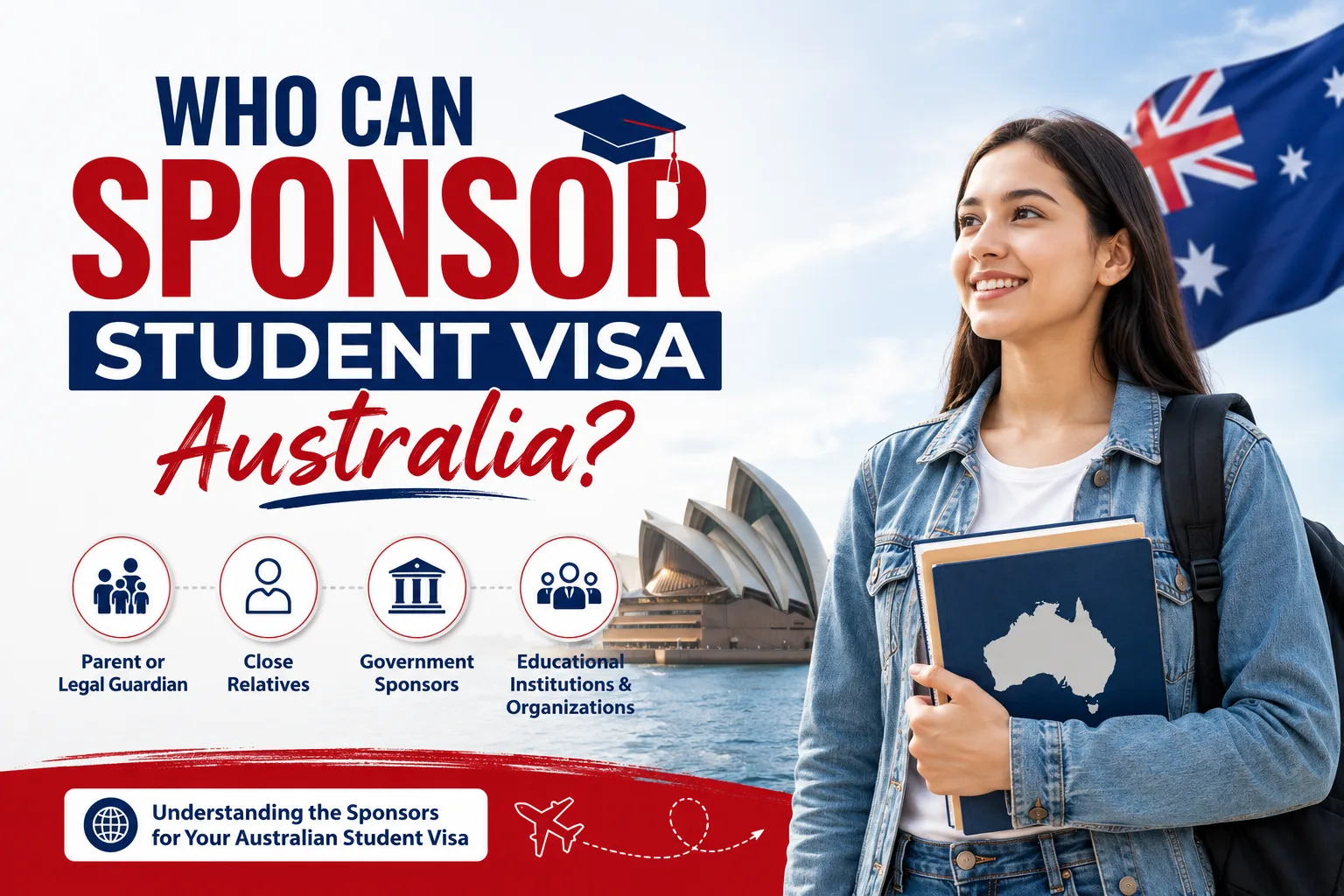
Unlike some countries that restrict sponsorship to immediate family, Australia's Student visa doesn't publish a rigid list of "eligible" sponsors. What the Department actually checks is whether the money is genuinely available to you and whether the source of those funds is credible. In practice, the most commonly accepted sponsors are:
- Yourself — using your own savings, fixed deposits, or income if you've been working.
- Parents — the single most common and most straightforward sponsor relationship to prove.
- Spouse or partner — particularly if you're applying with a partner visa alongside your own.
- Grandparents, siblings, aunts, and uncles — accepted, but expect to submit a relationship proof (birth certificates, family register) alongside financial evidence.
- A registered education loan provider — a bank or NBFC loan sanction letter is treated as strong, independent evidence of funds.
- An employer or scholarship body — if you're being sent to study by a company or a recognised scholarship scheme.
What matters more than the label "parent" or "uncle" is whether you can show the relationship is real and the funds are legitimately theirs to give.
Can a Friend or Distant Relative Be Your Sponsor?
This is one of the most searched questions on student visa forums, and the honest answer is: yes, but it's the riskiest category. A friend, distant cousin, or family acquaintance can legally provide funds for your Australian Student visa. The catch is that case officers scrutinise these relationships far more closely than a parent-child sponsorship, because there's a higher chance of undisclosed loan arrangements or third-party fraud.
If a friend or extended relative is sponsoring you, be ready to include:
- A clear, honest letter from the sponsor explaining why they're supporting you
- Evidence of an existing relationship (not one that started right before the application)
- Full documentation of how the sponsor earned or holds the funds
If your case involves an unusual sponsorship arrangement, it's worth getting a second opinion from a registered migration agent before you lodge, since this is one of the areas where applications are most often queried or refused.
How Much Money Does Your Sponsor Need to Show?
The financial requirement is reviewed periodically, so always cross-check the live figure on the Department of Home Affairs website before you apply. As it stands for 2026, here's what a sponsor needs to demonstrate for a 12-month period:
| Who it covers | Amount required (AUD, per year) |
|---|---|
| Primary student applicant | AUD 29,710 |
| Accompanying spouse or partner | AUD 10,394 |
| Each accompanying child | AUD 4,449 |
On top of these living cost figures, your sponsor also needs to cover your course tuition fees and a return airfare. These numbers change periodically, so treat them as a guide rather than gospel for the day you lodge.
What Documents Prove a Genuine Sponsorship?
Weak or inconsistent paperwork is one of the most common reasons genuine sponsorship claims get rejected. The documents that carry real weight with a case officer include:
- Six months of bank statements showing the funds have been sitting there, not just deposited days before lodging
- Salary slips matched against bank credits, to show the money's origin is legitimate income
- The last two to three years of income tax returns for the sponsor
- An education loan sanction letter from a recognised bank or lender
- Fixed deposit certificates that are at least six months old
- A notarised declaration or affidavit of support confirming the sponsor's commitment and relationship to you
Case officers are trained to spot the same red flags repeatedly: gold loans presented as savings, large lump-sum deposits with no paper trail, or sponsor income that doesn't match the sponsor's declared occupation. If any of your evidence looks unusual, it's better to explain it upfront in your Genuine Student response than to leave it for the officer to question.
Do You Even Need a Sponsor If You're Self-Funding?
If you've been working and have your own savings, fixed deposits, or investments that meet the required threshold on their own, you don't need a third-party sponsor at all — you're your own financial sponsor. The evidence standard is the same either way: the funds need to have a clear, traceable source and need to have been available to you for a reasonable period before you apply, not moved into an account the week before lodging.
Remember that your sponsor's finances are only one part of the application — you'll also need to submit valid IELTS or PTE scores alongside your financial evidence, since English proficiency and funding are assessed together as part of the same file.
How Sponsorship Fits Into the Genuine Student (GS) Requirement
Since March 2024, Australia replaced the old Genuine Temporary Entrant (GTE) test with the Genuine Student (GS) requirement. Under GS, you answer a structured set of questions directly in your online application, and your financial circumstances — including who's sponsoring you and why — need to tell a consistent story alongside your study and career plans. A sponsorship that looks financially sound on paper can still raise questions if it doesn't fit the rest of your narrative, for example a distant sponsor with no clear reason to fund your specific course. Case officers read the whole application together, not the finances in isolation.
What Happens to Your Sponsor's Commitment After You Arrive?
A financial sponsorship only needs to cover you for the period the Department assesses at the time of your application — it isn't a lifelong commitment. Many students go on to work part-time once they land, easing the load on whoever backed them. If your course leads somewhere longer-term, it's worth understanding your options early: many graduates move onto a Temporary Graduate visa once their studies finish, and some go on to explore PR in Australia after their study visa through a skilled migration pathway.
Common Sponsorship Mistakes That Lead to Refusal
- Funds parked just before applying: a lump sum deposited a week before lodging looks exactly like a temporary loan arranged for the application, even when it isn't.
- No proof of relationship: claiming a sponsor is a relative without documents to back it up.
- Sponsor income that doesn't add up: a declared salary that doesn't match the size of the funds being offered.
- Ignoring dependants: forgetting to budget for a spouse or child travelling with you, which case officers will notice immediately.
- Copy-pasted GS answers: generic responses that don't reflect your actual sponsor or circumstances.
Frequently Asked Questions
Can my uncle or aunt sponsor my Australian student visa?
Yes. Extended relatives such as uncles, aunts, and grandparents can sponsor you, provided you supply relationship proof and clear evidence that the funds genuinely belong to them.
Can two people jointly sponsor one student visa applicant?
Yes, it's common to combine evidence from more than one sponsor, such as parents plus an education loan, as long as each source is documented separately and clearly.
Does my sponsor need to travel to Australia with me?
No. A financial sponsor simply provides evidence of funds; they don't need to accompany you or hold any Australian visa themselves.
What happens if my sponsor's funds don't meet the full amount required?
You can combine multiple legitimate sources — for example, parental savings plus a partial education loan — as long as the combined total meets the published threshold and each source is properly evidenced.
Is a bank loan considered a valid sponsor for a student visa?
Yes. An education loan sanction letter from a recognised bank or lender is treated as strong, independent evidence and is widely used alongside or instead of family sponsorship.

Mr. Suman Prem is the Founder and CEO of GIEC Global United Kingdom an international education and migration consultancy. With extensive experience in the education and migration industry, he leads GIEC Global in helping students, professionals, and families explore study abroad, visa, and migration opportunities.
Under his leadership, GIEC Global has expanded its services across multiple international destinations, providing guidance on education admissions, scholarships, student visas, immigration pathways, and related services. His focus is on delivering reliable, transparent, and professional guidance to clients throughout their international journey.